
Articles
August 13, 2026
The "It Factor" Isn't Always Enough
She Had Everything It Took to Succeed On Camera... Until the Camera Light Turned On
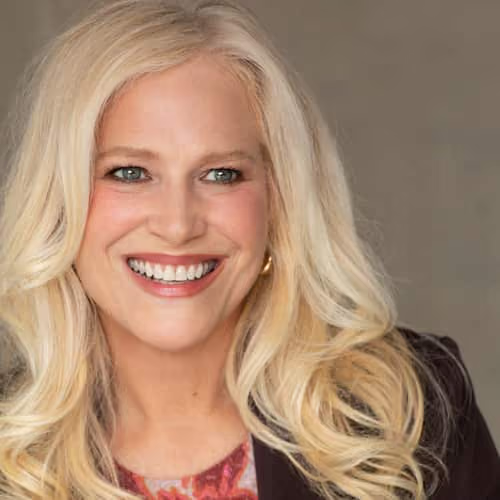
Lynda Halligan

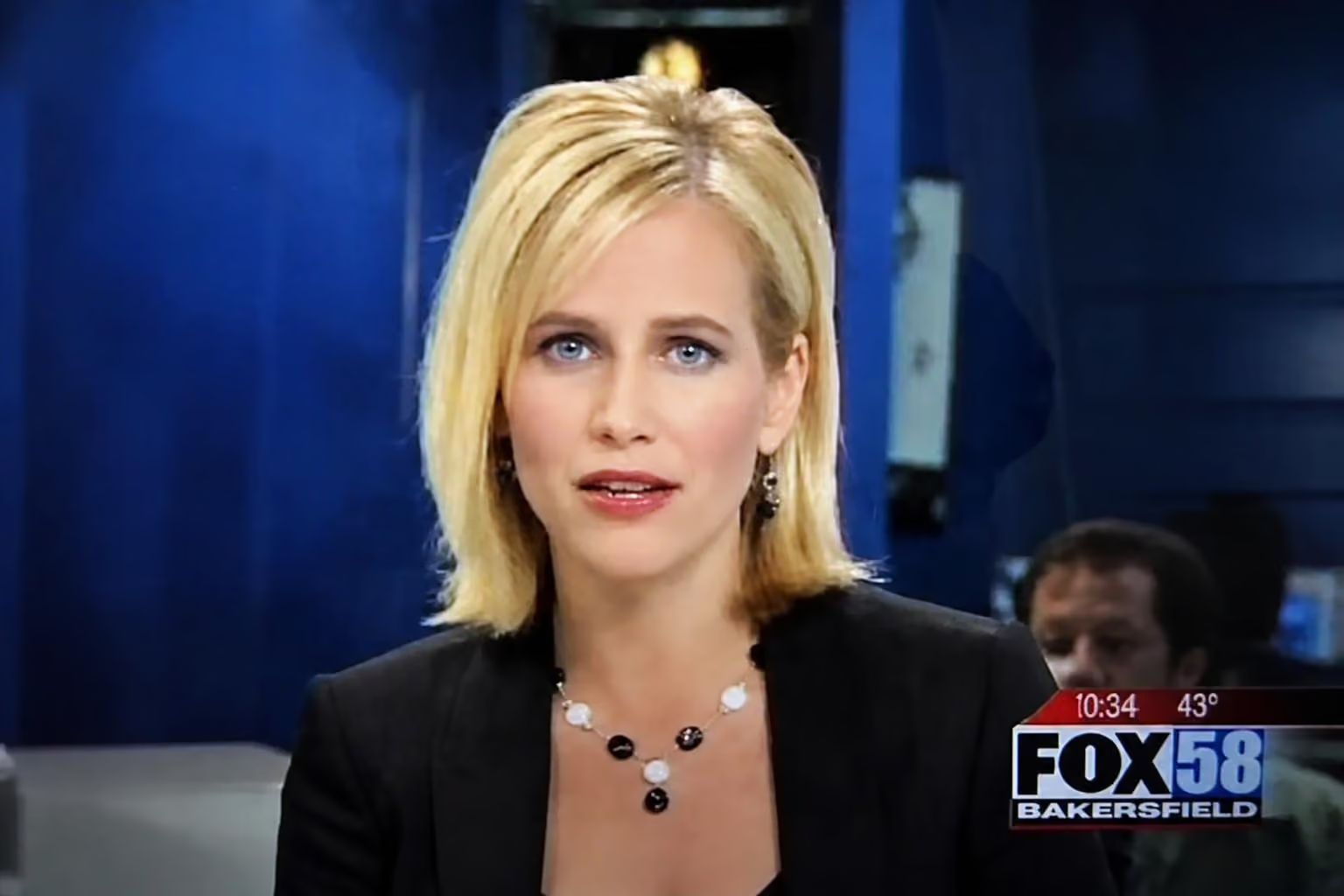
Years ago, when I was an evening news anchor, I worked with a producer who ultimately wanted to be on air. She got her shot doing weather on the weekends. She had already become a great friend of mine (and we've grown even closer over the years), so I was absolutely thrilled for her.
I remember thinking, “She has what it takes.” She's intelligent, educated, personable, likable, confident, charismatic, funny, professional, beautiful and stylish. She already has solid experience in television production. She's paid her dues. She's genuinely interested in science. She's young but mature. She gets it. She's a natural. She has the "It Factor." This is going to be amazing.
Then she started on air, and I watched live.
The issues weren't what you might think. Her skill on the green screen was fine. She delivered the forecast accurately. She didn't point to San Diego and call it San Francisco. Kudos.
But there was a problem.
She wasn't being herself.
It wasn't intentional. Somewhere between stepping onto the set and the camera light turning on, she became someone else - or at least someone she thought she was supposed to be.
"No!" I told her. Don't be who you think you're supposed to be. Don't try to sound like the meteorologist you grew up idolizing in a major news market. Don't try to become what you think viewers in this smaller market want to see.
Just be you.
That should be the easiest thing in the world.
But for some people, it isn't.
She asked for my help. She came over, and we watched some of her clips together.
I pointed to the screen.
"Who is this?" I asked.
"What do you mean?"
"I know you. This isn't you. What are you doing?"
I finally said, "You're not playing a role. You're playing... yourself. At least you're supposed to be."
The lesson seemed so simple.
Now we've figured out the problem. Perfect. On Saturday, when you do your next forecast... just be yourself. Done. Now let's go get dinner.
If only it were that easy.
How do you teach someone to be themselves when they're supposed to know themselves better than anyone else on the planet?
It actually felt strange watching her on camera in those early days. She looked like my friend. She sounded like my friend. But somehow, the person I was watching wasn't my friend.
You might think this story is about authenticity. And it is - but I think it goes deeper than that.
It was about permission.
I gave her permission to stop performing.
I didn't think of it that way at the time, but I do now.
When I was a news anchor and met someone who had never seen me on television, they'd ask what I did for a living. After I told them, they'd almost always say, "Do your newscaster voice."
I'd respond, speaking normally, "This is my newscaster voice."
"No, no," they'd insist. "You know... the TV voice."
I always laughed because it wasn't like I was the voice of some famous cartoon character. Whether I was on camera or off, I sounded exactly the same.
I had the voice... of me.
So let me give you permission.
Permission to stop sounding like a broadcaster.
Permission to stop sounding like an executive.
Permission to stop sounding like everyone else.
Permission to sound exactly like yourself.
The irony is that people often believe sounding more polished will make them more credible. In my experience, the opposite is usually true. Audiences don't connect with perfection. They connect with people. Confidence grows when you stop trying to imitate someone else's version of credibility and start trusting your own voice.
I’m happy to share that my friend and colleague went on to great success in much larger television markets. She had the talent all along. Once she gave herself permission to be herself, everyone else got to see what I'd seen from the beginning.
This lesson isn't only about television.
It's about:
- Podcasts
- Media interviews
- Keynote speeches
- Investor pitches
- Job interviews
- Board meetings
- Virtual presentations
It applies to just about everyone.
Over the years, I've coached broadcasters, executives, business owners, association leaders, aspiring actors and more. I've discovered something quite surprising.
The camera doesn't create who you are.
It reveals who you believe you have to be.
My job isn't to teach people how to perform.
It's to help them stop performing.
Maybe the goal isn't to become more polished.
Or more impressive.
Or more like someone you've admired for years.
Maybe the goal is much simpler than that.
Stop performing.
Just be.
If you'd like to learn more about Halligan Media or explore how we might work together, I’d love to hear from you. You can reach me at Lynda@HalliganMedia.com.
.avif)