Articles
September 29, 2026
Be Ready So You Don’t Have to Get Ready
What Earthquake Preparedness Can Teach Us About Communication
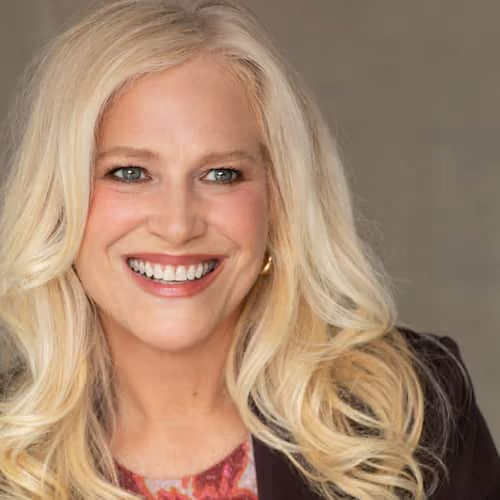
Lynda Halligan
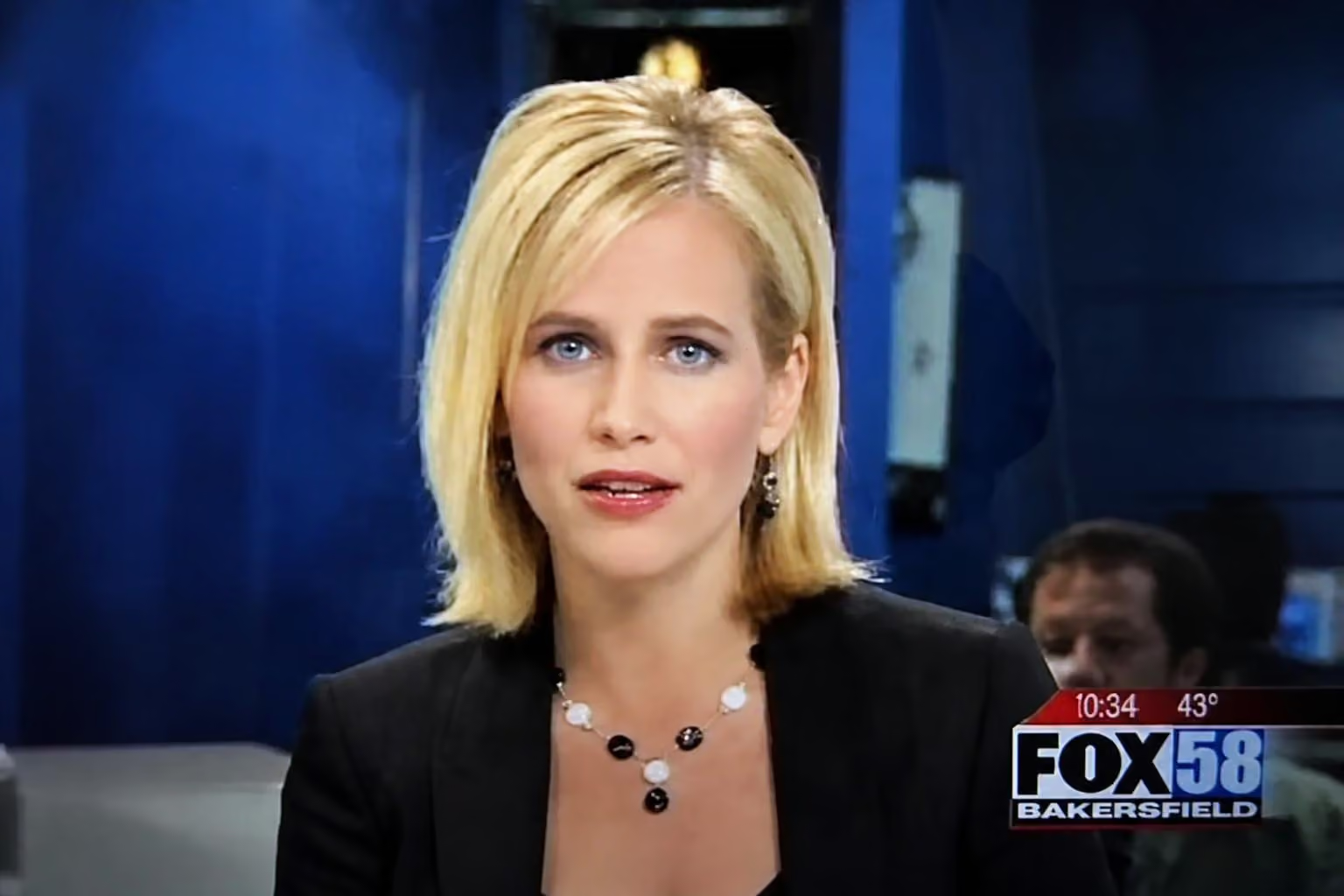
On December 22, 2003, a magnitude 6.5 earthquake struck California’s Central Coast near San Simeon. It was actually my birthday, something I had completely forgotten until I looked up the date while writing this blog.
At the time, I was a morning reporter and noon anchor at the CBS and FOX affiliates in Bakersfield, California. The earthquake hit at 11:15 a.m., just 45 minutes before our noon newscast.
I jumped into action.
We would learn later that two people had been killed in the earthquake in Paso Robles, not too far from our viewing area. At the time, though, we were getting reports of major damage in downtown Paso Robles. I immediately began gathering the latest information for the broadcast.
Then my executive producer shouted, “Get on set! We’re breaking in.”
I raced up to the set.
As I sat at the anchor desk waiting to go live, we experienced an aftershock - maybe multiple aftershocks. I looked up and noticed the studio lights above my head swinging back and forth.
It was clearly a hazard.
Did I leave the anchor desk?
Definitely not.
I had only been at the station for a couple of months. Even though I’m a “safety first” kind of gal, I didn’t want to get fired. I was paying attention, though. If, during the live broadcast, I sensed the lights falling, I was going to duck under the desk and cover my head.
Since then, I’ve watched other news anchors experience earthquakes live on television and found myself thinking: Newsrooms are responsible for covering breaking news and natural disasters - when they happen, as they happen - but what’s their emergency plan? And if you own or run a business, what’s your plan?
There’s a statement I say all the time when asked for, not disaster preparedness guidance, but career advice: Be ready so you don’t have to get ready.
This subject came up again the other day at a quarterly meeting of Falck’s Community Advisory Board, where I serve as a member. Falck provides emergency ambulance services in Orange County as well as other parts of California and the United States. The company is offering a free earthquake emergency preparedness class to organizations and groups in the community.
As I looked through the information on the class, something became clear to me.
The five areas Falck addresses to help people prepare for an earthquake can also serve as a good framework for something I’ve spent much of my career focusing on: being prepared to communicate.
As we wrap up September, also known as National Preparedness Month, I thought I’d take Falck’s tips on earthquake preparedness and apply them to communications preparedness.
1. Falck - Keep looking for the most up-to-date information with local public service agencies and state and federal agencies.
In an emergency, information can change quickly. You need to know where to go for reliable information and make sure what you’re relying on is current.
The same is true when you communicate.
Before an interview, presentation, meeting or public appearance, do your homework. What’s happening right now? What led up to it? What has changed? What is your audience likely to know already? What are the big questions people are asking?
I spent years interviewing people as a television journalist. You could usually tell who was really ready to go and who was winging it.
Preparation starts with knowing what you’re walking into.
2. Falck - Have an Emergency Plan in place prior to an earthquake.
Falck’s Emergency Plan includes knowing how you’ll receive emergency alerts, where you’ll shelter, how your family or household will communicate and your evacuation route. It also involves building or purchasing a preparedness kit and keeping it up to date.
The key word here is prior.
That newsroom experience taught me something I understand much better today: You need the plan before the lights start swinging.
The same principle applies to communication.
If you’re an organization, who speaks for you? Who needs to be notified if something happens? Where does your information come from? Who approves it? How will you communicate with employees, customers, the media or the public?
If you’re preparing for an interview or presentation, what are the most important things you want people to remember? What questions are you likely to be asked? What will you do if you get a question you weren’t expecting?
You don’t need to predict everything that could possibly happen, but you do need to plan.
3. Falck - How to access your household needs.
In an earthquake or other emergency, that means knowing what your household will need and making sure you can access it. That could include food, water, emergency supplies, pet supplies, important documents, cash and contact information.
Now, think about that from a communications standpoint.
How will you access your communications needs when you need them?
That could mean facts and figures, contact information, background materials, photographs, biographies, previous statements, talking points or other important documents.
For an individual preparing for an interview, it might be much simpler. What information do you need to review? Who is interviewing you? Who is the audience? What are the two or three points you absolutely want to make?
Knowing the information exists somewhere isn’t particularly helpful if you can’t find it when you need it.
4. Falck - Special needs first aid considerations.
In emergency preparedness, those considerations can be critically important. Every household is different, and some people may require medications, medical equipment, mobility assistance or other specialized resources.
The same principle - different people have different needs - applies to communication.
There is no single approach to communication that works for every person, organization or audience.
A CEO preparing for a national television interview has different needs than a small-business owner talking to a local reporter. A nonprofit preparing for a community meeting has different concerns than an organization responding to a crisis. Someone who is perfectly comfortable speaking to 500 people in a ballroom may freeze when a camera is pointed at them.
And don’t forget about the people on the receiving end of your message. Different audiences may need different information or different ways of receiving it. Consider language, accessibility, age, familiarity with the subject and how and where your audience gets its information.
Know your particular needs, challenges and vulnerabilities - and know your audience’s.
Then prepare for those.
5. Falck - How to document your plan and how to practice.
You can have a beautifully organized emergency plan sitting in a drawer. But if no one in your household knows what’s in it or what they’re supposed to do, how useful will it be when the ground starts shaking?
The same is true with communication.
You can write the perfect talking points. You can prepare pages of notes. You can know exactly what you intend to say.
Now say it out loud.
Practice answering questions. Run through realistic scenarios. Have someone ask you the question you hope nobody asks. Record yourself and watch it back.
When I work with people on camera, I don’t want them to memorize a script. Too often, that sounds canned and insincere. I want them to know the information in their head and convey it naturally.
The goal of preparation is not to sound rehearsed.
The goal is to be prepared enough that you can respond effectively when something unexpected happens.
That’s true in front of a camera.
It’s true in a crisis.
And, as I learned while sitting under those swinging studio lights, it’s certainly true during an earthquake.
Be Ready
I’ve spent much of my career in situations where preparation mattered - live television, media interviews, crisis communications and emergency preparedness.
Being prepared doesn’t mean you’ll know exactly what’s going to happen.
You won’t. You can’t.
It means you’ve done enough beforehand that when something does happen, you’re not starting from zero. You’re as prepared as possible to handle whatever comes next.
Be ready so you don’t have to get ready.
When it comes to communication, preparation matters. Halligan Media helps organizations strengthen their messaging and communicate clearly when it counts. Learn more at HalliganMedia.com.
Free Earthquake Preparedness Training in Orange County
Falck is offering free earthquake emergency preparedness training for organizations and groups in Orange County covering the topics mentioned above.
To schedule a training, contact:
Zachary Kim - Community Educator, Falck
zachary.kim@falck.com / 657-732-9617
.avif)